
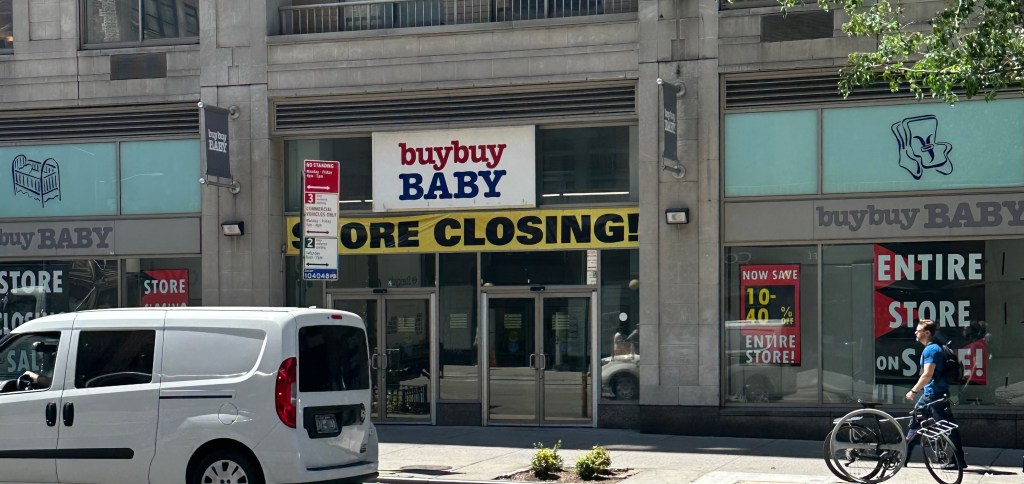
When Bed Bath & Beyond bought – perhaps reluctantly, perhaps out of parental loyalty and maybe even as a sound business investment – BuyBuy Baby in 2007, it’s fair to say that none of the people involved in that deal had any idea that less than two decades later it would be called the “crown jewel” of a company that was otherwise pretty much worthless.
With the news this week that the now bankrupt and rapidly disintegrating Bed Bath & Beyond would be holding a separate auction for its Baby division following the court’s approval of its sale to Overstock.com, it became clear – crystal clear as a few good men would say – that this once massive and incredibly successful retail chain which had 1000 stores at its peak had been reduced to an afterthought…and barely that.
Overstock.com, which had submitted what’s called a “stalking horse” bid of $21.5 million, essentially set the table stakes for any subsequent interested parties. Consider it the ante.
While rumors swirled around about additional bidders there were no others and the e-commerce home furnishings brand got the big blue brand name, the online URL and its accompanying list of customers and registered users and any other digital pieces up to and including the architecture of the once-ubiquitous coupons. Nobody wanted anything to do with the remaining 360 or so stores, any inventory still sitting on the shelves and, most of all, any of the liabilities when it came to pensions, severance or going away parties
That doesn’t appear to be the case with BuyBuy Baby, which was founded by two sons of Bed Bath’s co-founder Leonard Feinstein in 1996 and had grown to eight stores before it was purchased for $67 million plus the assumption of about $19 million in debt. In the following 15 years, in the typical slow-go/risk-adverse strategy that was a hallmark of the parent company, it grew to about 160 locations, with estimated annual revenue of about $1.5 billion. But at just a tenth or so the size of the mothership it always appeared to be an afterthought, even when its closest competitor, Babies’R’Us, went out of business, seemingly opening up an enormous void in the marketplace that it was the best suited retailer to fill.
Now it’s being called the “crown jewel” by CNBC and it has attracted multiple bidders so far, both known and rumored, which prompted the parent company to cull it out of the overall auction process and try to milk it for a few more investor bucks. At least one bidder is rumored to be interested in keeping all or some of the physical stores open as well as the e-commerce side of the business. The court has set a June 28 date for this Baby auction though previous deadlines have been extended as new bidders expressed interest in getting into the process. Bed Bath told CNBC as many as 100 parties had contacted it with interest for either or both brands.
In the meantime both nameplates continue their liquidation sales under the auspices of Hilco, the third-party close-out specialist which has been bringing in a non-stop array of additional merchandise to fill out the previously depleted store shelves. These sales are expected to run through the end of the month regardless of the final outcome of both nameplates.
As with most final days for so many of what were once great and much-loved retail operations, the Bed Bath & Beyond and BuyBuy Baby endings are sad codas to stories that didn’t have to end this way. The once-mighty retailing company at its peak in 2017 had some 1,500 stores across multiple nameplates with annual revenues over $12 billion. Its market cap was more than $17 billion, a far cry from its final selling price this week.
Now Baby is likely to be the only physical survivor of a business that The Simpsons TV show, in what had to be prescient moment, once called Blood Bath & Beyond.
 WarrensReport