
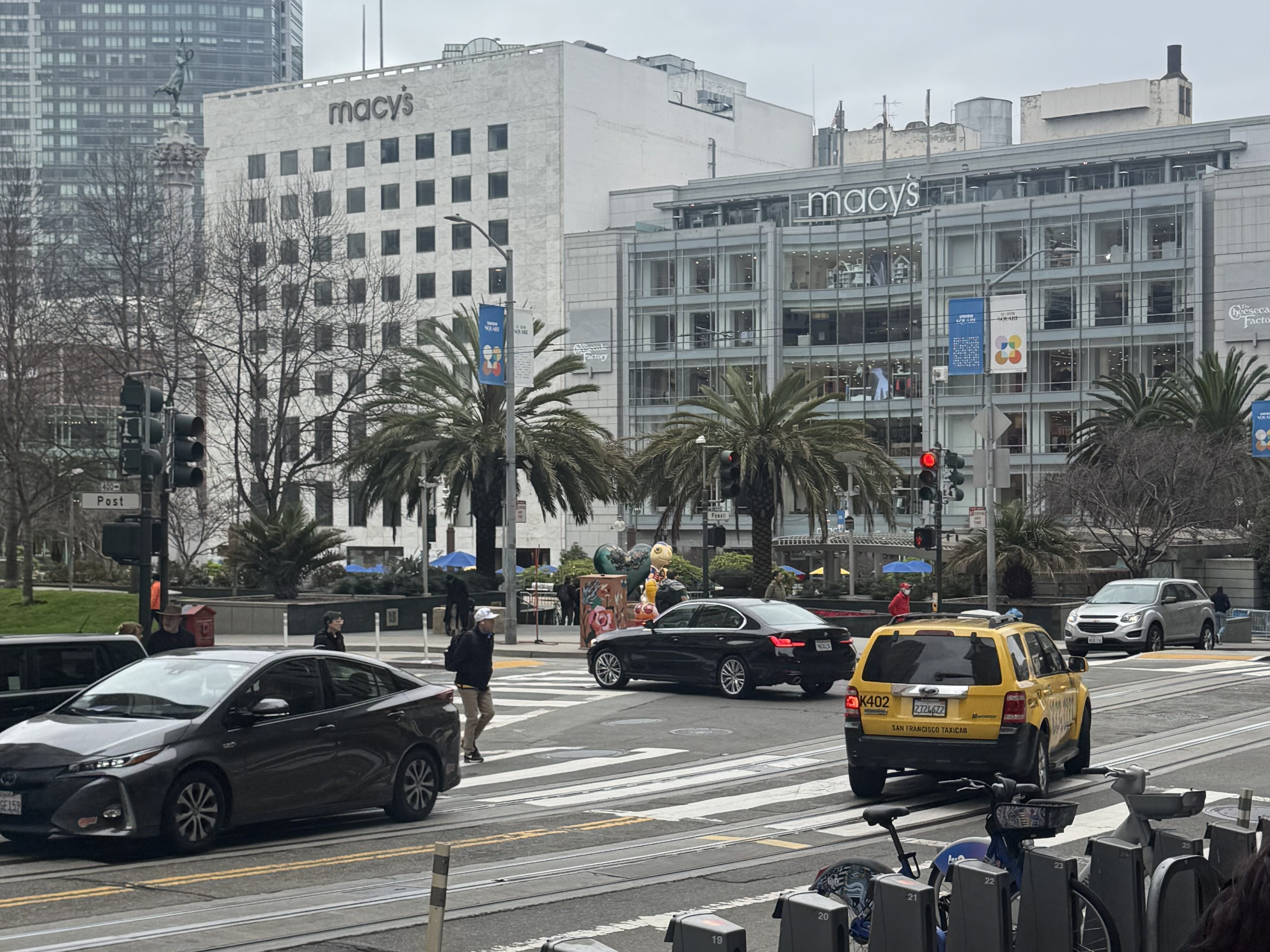
Downtown San Francisco retailing is not dead. But it’s not doing great, either.
The reports of the death of Union Square and surrounding downtown neighborhoods of San Francisco have been particularly relentless with major store closings, soaring vacancy rates and streetscapes overrun with homeless, criminals and other unsavory characters.
But after a visit to the area earlier this month it’s clear that the retail apocalypse the worst reports are suggesting is greatly exaggerated. There are many stores still open and functioning with tourists, office workers and locals all frequenting them. If it all reminds you of an earlier time when New York City was supposedly dying in the 1970s then the coincidence is probably not accidental. These kinds of stories feed on themselves and almost take on a lifeform of their own.
But let’s not sugarcoat the situation. Big stores like Nordstrom in the San Francisco Centre shopping mall are shuttered and the mall itself is probably running a 75 percent vacancy rate. The other big anchor of the center is Bloomingdale’s and parent company Macy’s announced a few weeks ago it would be closing it next month. You can already tell it’s winding down with inventory levels looking pretty meager and the downtrodden faces of the few employees still working the store telling you all you need to know about what’s coming.
A few blocks away is the Macy’s store itself, a fixture on Union Square for generations. The company has said the store will not continue to stay open but has not given a closing date. No matter. You can smell the stench of death in the store with squeaky escalators in need of maintenance, sparse displays and again, very sad faces on the people working the store.
Surrounding the Macy’s are countless empty storefronts, even if the Neiman Marcus across the street remains open. One has to think that now under Saks ownership this one is going to go away sooner rather than later. Across the park is the Saks Fifth Avenue store and that too could be a casualty under parent company Hudson’s Bay’s cost cutting.
The rest of the area is pretty dismal. From Market Street – never a great retail location but one that managed to have a pretty solid tenant base – to the side streets off that park that used to house a who’s who of luxury and near-luxury brands, the “for rent” signs far outnumber the retail nameplates. A few do remain, including Gucci, Chanel, Hermes, Victoria’s Secret, Nike and Gump’s – the last a downsized, resurrected and relocated version of the landmark home and jewelry that was once a destination onto itself for those in the know. The original store, by the way, is empty.
The busiest retailer in the neighborhood? It’s the Apple Store, which faces the park with an open front inviting people to come in, browse, get advice and even – god forbid—buy something. Does this prove that the right store in the right location can prosper? Maybe, but it does stand out for attracting the mix of locals and visitors that any downtown retailer needs to survive.
As conventions and conferences continue to ramp up their schedules, workers return to offices as the work-from-home phenomenon fades and tourists rediscover that San Francisco is a great place to visit, even more so as pricing makes it a great value one has to think retail will return, having bottomed out.
Don’t be surprised to find that some unexpected brands decide to give San Francisco another chance, particularly if landlords are realistic in their leasing expectations. Unlike other urban downtowns that never recovered from hard times, this city – they do call it The City – has a lot going for it and is not in a self-fulfilling death spiral. It may take a while and when it comes back it probably won’t resemble what came before but don’t count it out quite yet. Earthquakes, the tech meltdown at the turn of the century and now Covid have all taken their shots and this too shall pass.
 WarrensReport